Petrol Subsidy Eligibility 2026: Who Qualifies for Rs100 Relief?
Petrol subsidy eligibility in Pakistan 2026 depends on the vehicle category and the scheme’s verification requirements. The PM Fuel Relief Scheme covers eligible motorcycles, rickshaws, other two- and three-wheelers, and vehicles with engines up to 800cc. The relief is Rs100 per litre, with reported limits of up to 20 litres per month for two- and three-wheelers and 30 litres per month for vehicles up to 800cc.
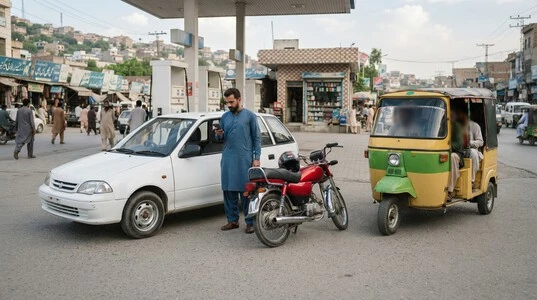
Registration is handled through SMS to 9771, using the required CNIC and vehicle information. However, meeting the vehicle criteria does not by itself guarantee successful registration; the submitted details must also pass the applicable verification process.
The scheme is being rolled out nationwide, so eligibility and registration details should be checked against the latest official instructions as implementation progresses.
Petrol Subsidy Eligibility Scorecard
Answer the questions to see whether your situation appears consistent with the reported vehicle, fuel, and applicant requirements, then estimate the maximum monthly relief.
Registration readiness checklist
Reported article figures: Rs100 per litre; up to 20 litres/month for covered two- and three-wheelers; up to 30 litres/month for vehicles up to 800cc.
Who Is Eligible for the Petrol Subsidy in Pakistan?
The petrol subsidy eligibility rules for Pakistan’s 2026 fuel relief scheme focus on specific vehicle categories rather than all petrol users. The government says the scheme covers motorcycles, rickshaws, Qingqi rickshaws, other qualifying two- and three-wheelers, and vehicles with engine capacity of up to 800cc. Eligible beneficiaries receive Rs100 per litre of petrol relief.
Eligible vehicle categories
Motorcycles and bikes: Motorcycles are included in the scheme, with relief available on up to 20 litres of petrol per month. Registration and the required checks must still be completed before the benefit can be used.
Rickshaws and Qingqi/Chingchi vehicles: Rickshaws, Qingqis/Chingchis and other qualifying two- and three-wheelers are also covered under the reported 20-litre monthly category. However, not every three-wheeler should be assumed eligible automatically; the vehicle and applicant remain subject to the scheme’s applicable verification requirements.
Small cars and vehicles up to 800cc: Vehicles with an engine capacity of 800cc or less fall into a separate category, with relief on up to 30 litres per month. The 800cc limit matters: a vehicle above that capacity does not fall within this reported category unless later official rules provide otherwise.
Who may not qualify?
A vehicle may fall outside the reported eligibility if it is above 800cc, outside the qualifying two- or three-wheeler categories, or fails the required registration or verification checks. Relief is also limited to the applicable monthly quota rather than unlimited petrol purchases. Diesel is not part of this petrol relief category.
Petrol Subsidy Eligibility Criteria and Requirements
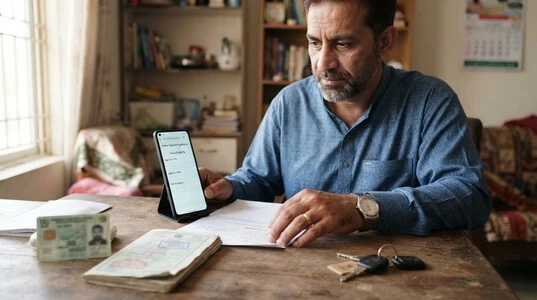
Meeting the vehicle criteria is only one part of petrol subsidy eligibility. The registration process also uses applicant and vehicle information to verify the request. The government says registration requires four basic details: the applicant’s CNIC number, vehicle number plate, province of registration, and vehicle registration date.
CNIC and applicant information
The applicant must provide accurate CNIC verification details. Current reporting also indicates that the SIM used for registration should be registered in the applicant’s own name. This helps connect the registration request with the applicant’s identity and the relevant records. An incorrect CNIC or mismatched SIM information can therefore create verification problems.
Vehicle registration and Excise verification
The registration process requires the vehicle’s number plate or registration number, registration province, and registration date. Vehicle information is checked against official records, including provincial or territorial Excise Department data. The government has said provincial vehicle information is being used as part of the digital fuel-relief system.
This means an otherwise qualifying vehicle can still encounter a registration issue if its submitted details do not match official records.
Is vehicle ownership required?
The current framework distinguishes eligible users or owners, but the Economic Coordination Committee has also specified that relief is limited to one vehicle per user or owner and restricted to non-commercial users. Simply driving a qualifying vehicle should not be treated as an automatic guarantee of eligibility; applicants should follow the latest official verification rules as implementation continues.
Petrol Subsidy Monthly Quota and How Much You Can Save
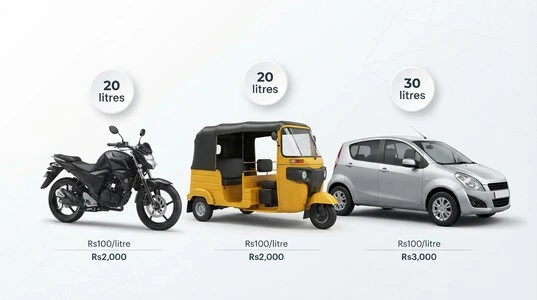
The reported Rs100 petrol subsidy is calculated against a monthly fuel quota that varies by vehicle category. Motorcycles and covered two- and three-wheelers have a reported limit of 20 litres per month, while eligible vehicles up to 800cc have a 30-litre monthly limit. These limits represent the maximum fuel eligible for the reported relief; they are not guaranteed cash payments.
20-litre petrol subsidy for motorcycles and three-wheelers
Motorcycles, rickshaws and other covered two- and three-wheelers can receive Rs100 per litre on up to 20 litres per month. At the full reported quota:
20 litres × Rs100 = Rs2,000 maximum calculated relief
30-litre petrol subsidy for vehicles up to 800cc
Eligible vehicles with engine capacity up to 800cc fall into the reported 30-litre category. At the full quota:
30 litres × Rs100 = Rs3,000 maximum calculated relief
Petrol purchased beyond the applicable monthly limit is not automatically covered by the subsidy.
| Vehicle category | Reported relief | Monthly limit | Maximum calculated relief |
| Motorcycles | Rs100/litre | 20 litres | Rs2,000 |
| Rickshaws / covered three-wheelers | Rs100/litre | 20 litres | Rs2,000 |
| Vehicles up to 800cc | Rs100/litre | 30 litres | Rs3,000 |
These figures reflect the reported scheme limits and should be checked against the latest official instructions as the fuel relief programme is rolled out.
How to Check Petrol Subsidy Eligibility Through 9771
The 9771 petrol subsidy registration system uses SMS to collect the basic information needed to register an eligible applicant for the PM Fuel Relief Scheme. The government says applicants can register from home by sending their CNIC number, vehicle plate number, province information, and vehicle registration date to 9771. Registration is intended to connect the applicant and vehicle details with the scheme’s verification process.
What is 9771 petrol subsidy registration?
Registration is an SMS-based process rather than a conventional online application. The current government announcement says the required SMS should be free of cost.
Reported REG 9771 registration format
A commonly reported format can be understood as:
REG CNIC Vehicle Number Province Code Registration Date
The information covers:
- CNIC number
- Vehicle registration or plate number
- Province or territory information
- Vehicle registration date
- Sending the required SMS to 9771
Treat this as a format guide, not an official template to copy blindly. Check the latest government instructions for the exact field order, province code and date convention before sending the message. The government confirms the four required information fields but does not state the exact REG string in the cited announcement.
What happens after registration?
After registration, the submitted information can be processed for eligibility and verification. For registered beneficiaries, the government says TOK is sent to 9771 before visiting a petrol station to receive a fuel-relief token. The token is then shown at the fuel station to obtain the subsidized fuel.
In simple terms: register → verify → request TOK → redeem the fuel relief.
What Is TOK 9771 and How Do You Get the Fuel Token?
TOK 9771 is the reported fuel-relief token request used after an applicant has successfully registered for the scheme. According to Radio Pakistan, registered beneficiaries send TOK to 9771 to receive a fuel-relief token before visiting a petrol station.
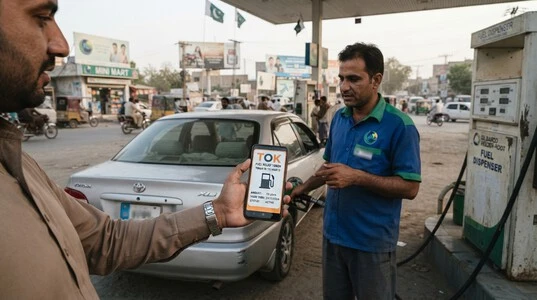
What does TOK mean?
TOK is part of the process for requesting the token used to claim subsidised petrol. Registration and the applicable verification process should be completed first; the token is not a substitute for eligibility or registration.
How the token is used
- Complete registration and verification.
- Request the fuel token through the reported 9771 process.
- Visit a participating petrol station.
- Present the token when claiming the relief.
- Complete the required verification and fuel purchase.
The government’s reported process connects 9771 registration → verification → TOK token → petrol station. However, applicants should follow the latest implementation instructions because participation and token-acceptance procedures may vary during the rollout.
Why Petrol Subsidy Registration May Fail
A qualifying vehicle does not guarantee that every 9771 petrol subsidy registration will be completed successfully. The government’s current process uses basic applicant and vehicle information for registration, including the CNIC number, vehicle number plate, province of registration, and vehicle registration date.
Common registration and verification problems
A registration problem can occur when the CNIC information is incorrect, the vehicle number is entered incorrectly, or the registration date does not match the available vehicle record. A wrong province code or incomplete information can also prevent the submitted details from being processed correctly.
Some reported eligibility conditions also depend on official vehicle information and the scheme’s verification system. Therefore, a vehicle may meet the broad category requirements but still require correction if its record cannot be matched. The government has emphasized a simplified registration process with minimum checks, so not every possible error should be treated as an officially confirmed rejection reason.
What to do if your petrol subsidy registration is rejected
First, compare your submission with your CNIC and vehicle registration documents. Recheck the plate number, registration date and province information before submitting again. Avoid repeatedly sending inaccurate details.
If the problem continues, use the official support or guidance channel provided for the scheme rather than relying on unofficial agents. Do not pay anyone who promises guaranteed approval or asks for unnecessary personal or financial information. As the nationwide rollout continues, specific error messages and correction procedures should be confirmed against the latest official instructions.
Is Diesel Included in the Petrol Subsidy?
No. The current reported petrol relief scheme is for petrol, not diesel. High-speed diesel (HSD) is reported as excluded from the Rs100-per-litre petrol relief programme. This means applicants should not apply the petrol subsidy eligibility rules, monthly quotas, or 9771 fuel-relief process to diesel purchases.
Any separate government assistance involving diesel, transport costs, or other fuel support should be treated as a different programme with its own eligibility rules. Because the fuel-relief scheme is being rolled out, check the latest official announcement if the government changes the fuels covered.
Petrol Subsidy Rollout, Availability, and Latest Updates
When does the scheme start?
The PM Fuel Relief Scheme began its initial rollout in Islamabad from midnight between September 14 and 15, 2026. The reported nationwide rollout was scheduled for midnight between September 16 and 17, covering the rest of Pakistan, including Azad Jammu and Kashmir (AJK) and Gilgit-Baltistan.
Registration and actual fuel redemption are separate steps. Registration may open before subsidised petrol becomes available at participating stations in a particular area.
Why rollout status matters for eligibility
A person can meet the reported vehicle criteria but still encounter temporary availability issues while the scheme is being implemented. Petrol-station participation and local system readiness can affect when an approved beneficiary can redeem the relief. The latest rollout instructions should therefore be checked before relying on older information.
Frequently Asked Questions About Petrol Subsidy Eligibility
Who is eligible for the Rs100 petrol subsidy?
The reported scheme covers eligible motorcycles, rickshaws, other qualifying two- and three-wheelers, and vehicles with engine capacity up to 800cc. Eligibility also depends on completing the required registration and verification process; having a qualifying vehicle alone does not guarantee approval.
Is a motorcycle eligible for petrol subsidy in Pakistan?
Yes. Motorcycles are included in the reported petrol relief scheme. The applicable category has a monthly limit of 20 litres, with relief of Rs100 per litre. The applicant and vehicle information must still pass the required registration and verification checks.
Is a rickshaw or Qingqi eligible for petrol subsidy?
Reported coverage includes rickshaws, Qingqi/Chingchi vehicles and other qualifying three-wheelers. These vehicles fall within the reported 20-litre monthly category. However, applicants should not assume that every three-wheeler qualifies automatically because registration and verification requirements still apply.
Is an 800cc car eligible for petrol subsidy?
A vehicle with an engine capacity of up to 800cc falls within the reported small-vehicle category. The reported monthly limit is 30 litres, with Rs100 relief per litre. Vehicles above 800cc do not fall within this reported category unless later official rules provide otherwise.
How much petrol subsidy can I receive per month?
The reported maximum calculated relief is Rs2,000 per month for motorcycles and covered two- and three-wheelers, based on 20 litres × Rs100. Eligible vehicles up to 800cc have a reported maximum of Rs3,000, based on 30 litres × Rs100.
How do I register for petrol subsidy through 9771?
The reported process uses SMS to 9771. Applicants provide their CNIC, vehicle number or plate, province information and vehicle registration date for processing and verification. Check the latest official instructions for the exact SMS format and field order before submitting your registration.
What is TOK 9771?
TOK 9771 refers to the reported fuel-relief token request made after registration. Once the applicable registration and verification steps are completed, the beneficiary requests the token and uses it when claiming subsidised petrol at a participating station.
Does petrol subsidy apply to diesel?
No. Current reporting describes this particular relief programme as petrol-only, with high-speed diesel excluded. The Rs100-per-litre relief, monthly quotas and 9771 process should not be applied to diesel or to separate government fuel-assistance programmes.
Why was my 9771 registration rejected?
Possible problems include incorrect CNIC or vehicle information, a registration-date mismatch, an incorrect province code, or vehicle details that cannot be matched with official records. Not every possible error is a confirmed universal rejection reason, so check the latest official guidance for the specific issue.
Does my SIM need to be registered in my own CNIC?
Current reporting indicates that the SIM used for the application should be registered in the applicant’s name. Because implementation details can change during rollout, applicants should confirm the latest official SIM and identity requirements before submitting their 9771 registration.